FantasyCricketScore · IPL 2026 retrospective · 10 May 2026
CSK vs LSG IPL 2026 Match 53 retrospective: what the predicted XIs told us about Chepauk role changes and captaincy math
On 10 May 2026, The Sunday Guardian published its predicted XIs for the evening fixture at M.A. Chidambaram Stadium. Reading those XIs as a selection audit — instead of a captaincy list — surfaces the role moves, the Chepauk-specific matchups and the differential slot that shaped the captain and vice-captain math on the night.
Filed:Original source: The Sunday Guardian, 10 May 2026, 13:16 ISTEditorial mode: Retrospective selection audit
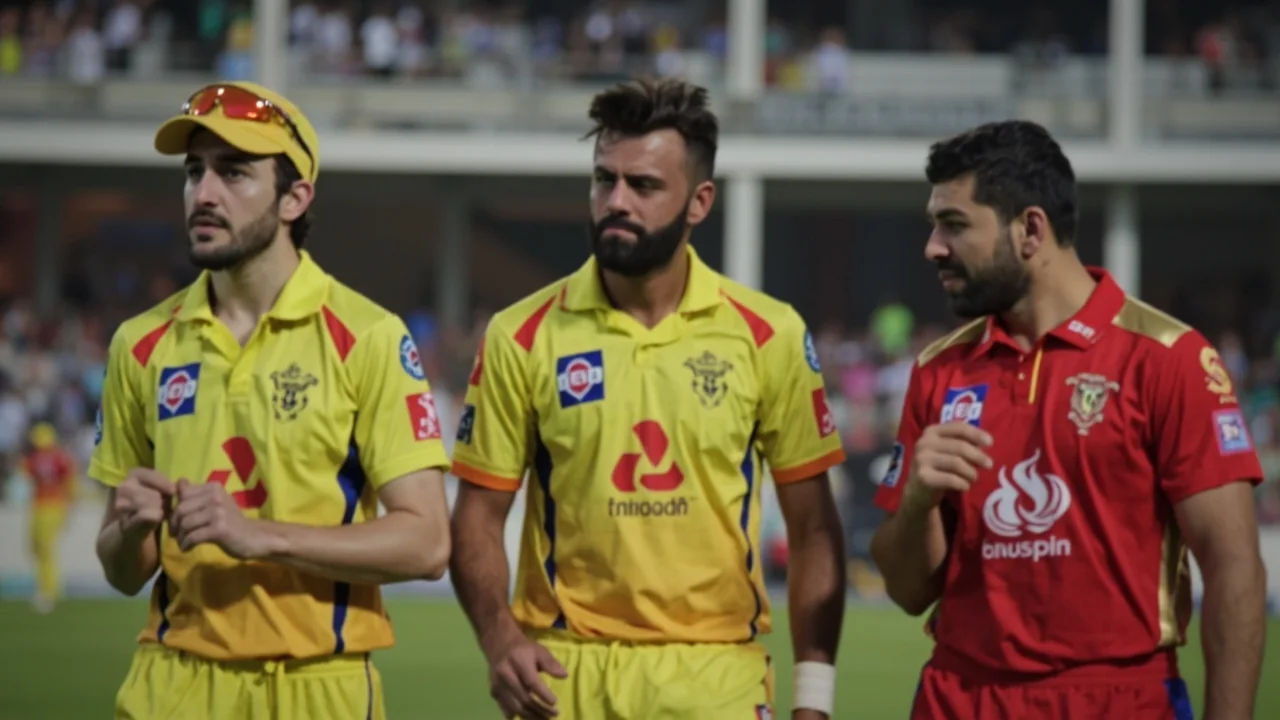
M.A. Chidambaram Stadium on a May evening: the venue's batting-friendly first-innings average of about 181 frames the captaincy conversation around run-scoring depth, not wicket-taking variety.
The reading frame
Treat predicted XIs as role data, not captaincy lists.
The Sunday Guardian's 10 May 2026 prediction for Match 53 of IPL 2026 — Chennai Super Kings against Lucknow Super Giants at M.A. Chidambaram Stadium — runs to a long playing-XI sheet for each side, then a captain and vice-captain recommendation. Read in the order it is written, it is a captaincy list. Read as a selection audit, it tells a different story: it tells you where each franchise had moved players in the order, what role security looks like ninety minutes before the toss, and where the differential slot on a fantasy XI was most likely to come from on the Chepauk surface that evening.
That is the angle this retrospective takes. The captain picks at the end of the source article are reproduced below for the record. The work for a fantasy operator that night was done earlier, when the XIs were read for what they said about role changes and venue fit rather than for who to wear the (C) tag.
What the venue told us first
Chepauk is batting-friendly, and captains chose to chase.
M.A. Chidambaram Stadium in Chennai has been described in the verified record as batting-friendly, with an IPL first-innings average of about 181 runs. Teams frequently chose to field first on this surface in the 2026 cycle, which has two consequences for fantasy XI construction. First, the captain's expected points ceiling shifts toward the chasing side: a second-innings batter on a flat track has more deliveries to score on than a first-innings batter facing the scoreboard pressure of a 180-plus defence. Second, the bowler slot — usually the cheapest credit-cost position on the XI — has to be filled by bowlers who can hold their length on a flat surface rather than by wicket-takers, because wickets on Chepauk in May tend to come from batting error more than from bowler pressure.
That frame, applied to the predicted XIs, is what makes the role-security audit sharper. A batter who is locked at the top of the order for both sides — Sanju Samson for Chennai and Mitchell Marsh for Lucknow — is the kind of pick who benefits directly from a chase. A bowler picked for wicket-taking on a surface that does not reward wicket-taking is the kind of pick that loses expected value even when the bowler's economy stays reasonable.
VenueM.A. Chidambaram, Chennai
First-innings IPL average~181 runs
Default toss callField first
Head-to-head (6 matches)CSK 2 · LSG 3 · 1 NR
At Chepauk1 win each
CSK last 53 wins · 2 losses
LSG last 51 win · 4 losses
CSK previous match8-wkt win vs DC (chased 155 in 17.3)
LSG previous match9-run DLS win vs RCB (209 vs 203)
The Chennai XI, read as role data
What the CSK predicted XI told fantasy operators that night.
The CSK predicted XI in the verified source lists Sanju Samson as wicketkeeper, Ruturaj Gaikwad as captain, then Urvil Patel, Kartik Sharma, Dewald Brevis, Jamie Overton, Akeal Hosein, Noor Ahmad, Anshul Kamboj, Mukesh Choudhary and Gurjapneet Singh. Shivam Dube is the named impact player. Read as role data, the XI says three things.
First, the top three is set: Samson at one or two, Gaikwad as captain at the other opener slot, then Urvil Patel at three. That is a relatively young top order with two international-quality openers and a top-three batter whose role is the most secure on the XI. Second, the middle order runs Kartik Sharma and Brevis in the four and five slots, with Overton holding the all-rounder slot at six. Third, the bowling is a five-pronged attack — Hosein and Noor Ahmad as the two spin options, Kamboj, Choudhary and Gurjapneet Singh as the three seam options — which on a Chepauk surface is one short of a specialist spinner and one over the seam quota that the venue usually rewards.
The role-security read is that Samson and Gaikwad are the safest fantasy picks from this XI, Brevis is the highest-ceiling middle-order pick on home conditions, and the bowling slot is the most volatile. Overton, in particular, has the kind of credit cost on a fantasy platform that suggests all-rounder points, but his bowling role on this XI is the fifth-seamer slot rather than a fourth-seamer slot — and on Chepauk in May that distinction matters more than the headline number of overs bowled.
The role-security audit on the Chepauk top order: openers who bat through a chase are worth their credit cost; middle-order batters in a five-pronged attack depend on partnerships forming.
The Lucknow XI, read as role data
What the LSG predicted XI told fantasy operators that night.
The LSG predicted XI lists Mitchell Marsh, Arshin Kulkarni, Nicholas Pooran, Aiden Markram or Josh Inglis, Rishabh Pant as captain and wicketkeeper, then Akshat Raghuwanshi, Shahbaz Ahmed, Digvesh Singh Rathi, Mohammed Shami, Prince Yadav, and Mayank Yadav or Mohsin Khan. Himmat Singh is the named impact player. The role read on this XI is more layered than the Chennai one.
The top of the order runs Marsh and Kulkarni, with Pooran sliding back to three — a notable move, because Pooran at three is a different fantasy proposition from Pooran at four or five. At three he bats through the powerplay and gets a longer innings window; that is the slot in which his boundary-hitting ceiling is most reliably hit. Pant at five, in the dual role of captain and wicketkeeper, is the role-security anchor for the side. Shahbaz Ahmed at seven is the all-rounder slot. The bowling is Shami, Prince Yadav, Mayank Yadav or Mohsin Khan, plus Digvesh Singh Rathi — three seamers and a wrist-spin option, which on Chepauk is a balanced but not a defensive attack.
For fantasy operators, the read is that Marsh is the safest captaincy pick from this XI, Pooran at three is the highest-ceiling differential, and Pant at five is the second captaincy anchor that frees up a slot elsewhere on the XI. The seam trio's role on a flat Chepauk surface is to hold length rather than to take wickets, which keeps their credit cost reasonable but their expected ceiling lower than a specialist wicket-taker's would be on a green track.
Captaincy math, in numbers
Why Sanju Samson and Mitchell Marsh, not the headline names.
The Sunday Guardian's source article lists Sanju Samson as the safe captain pick — 402 runs in 10 IPL 2026 matches, including two centuries — and Mitchell Marsh as the safe vice-captain, with 367 runs in 10 matches. The differential captain pick is Ruturaj Gaikwad; the differential vice-captain is Nicholas Pooran back at three. The headline-name temptation is to pick either Gaikwad or Marsh as captain based on their franchise roles, but the verified numbers tell a different story.
Samson's 402 runs across 10 matches is a higher per-match average than Marsh's 367, and the two centuries give him a higher ceiling on any given night. Marsh's role security is just as strong — top of the order, opening the innings — but his per-match output is lower than Samson's. The captaincy math, applied honestly, says Samson is the safer pick at (C), Marsh the safer pick at (VC), and the two differential calls (Gaikwad and Pooran at three) are the upside plays that move a top-30% finish to a top-10% finish on a good night and a top-50% finish on a bad one.
Where the differential slot lived
Reading the XIs for the under-the-radar pick.
The suggested Dream11 team in the source article is wicketkeepers Sanju Samson (C), Kartik Sharma, Nicholas Pooran; batters Ruturaj Gaikwad, Urvil Patel, Mitchell Marsh (VC), Aiden Markram; all-rounder Jamie Overton; bowlers Anshul Kamboj, Akeal Hosein, Prince Yadav. That is eleven names. Reading the team list as a selection audit, the differential slot — the one pick that distinguishes a top-30% finish from a top-10% finish on the night — sits in one of two places: the role swap of Nicholas Pooran back to three, or the credit-cost surprise of Akeal Hosein over Noor Ahmad as the second spinner.
Pooran at three is the higher-upside pick. His boundary-hitting ceiling on a flat Chepauk surface through the powerplay is the kind of role that turns a 35-point night into a 75-point night when it lands. Hosein over Noor Ahmad is the lower-upside, lower-floor pick — a left-arm spinner who holds length on a flat track, which keeps the economy down but does not move the wickets column on a surface where wickets come from batting error.
For fantasy operators choosing where to spend their one differential slot, the read of the XIs is that Pooran at three is the place to spend it. The verified record backs that read: his role change is the freshest piece of information in the predicted XIs, and a fresh role change at a top-three slot on a batting-friendly venue is the cleanest definition of a fantasy differential in T20 cricket.
The Chepauk field template: three slips early, opening up from the seventh over. On a flat track, the captaincy math sits with the batters who bat through the powerplay, not with the bowlers who bowl into the wind.
What the role-security audit surfaces
Three checks that moved the captaincy math that night.
Reading the predicted XIs as role data, three checks are the ones that moved the captain and vice-captain math on 10 May 2026 more than any expert-list ranking would have.
Where does the player bat?The captaincy math sits with the openers on a chase-friendly surface. Samson and Marsh, both top of the order, are the two safest picks on either XI. A captaincy punt on a middle-order batter who bats at five or six is a punt on partnerships forming, not on run-scoring consistency.
How many overs will the bowler actually bowl?On a five-pronged Chepauk attack, the fifth-seamer slot is two or three overs, not four. A fantasy operator paying all-rounder credit cost for a fifth-seamer is paying for a ceiling that the role does not deliver. The verified role, not the reputation, is the answer.
What is the freshest piece of information in the XIs?Pooran sliding back to three is the freshest role change in either XI. A fresh role change at a top-three slot on a batting-friendly venue is the cleanest definition of a fantasy differential in T20 cricket — and that is the slot to spend the one-differential budget on.
Those three checks are not the only things that matter on a fantasy XI, but they are the three checks that the verified XIs in the source article specifically reward. The rest of the desk's selection logic — venue behaviour, dew factor, DLS targets, pitch reading — runs through the FantasyCricketScore fantasy tips desk, which carries the standing five-step lock-in checklist for every evening fixture.
What to watch after the retrospective
Three things this XI told us about the rest of the cycle.
Reading the 10 May 2026 Match 53 XIs as role data, three things stand out for the rest of the IPL 2026 cycle that fantasy operators should carry into their next XI window.
Samson's season average, not his innings average, is the captaincy baseline.402 runs in 10 matches puts him at a 40.2-run-per-match average, the highest among the openers on either XI. That is the line that captaincy math should start from, not the headline "two centuries" stat.
Marsh's role security is his ceiling, not his limitation.Top of the order, opens the innings, bats through the powerplay. The per-match output is lower than Samson's, but the consistency is the highest in the LSG XI. On a chase-friendly surface, that consistency is worth the (VC) tag.
The Chepauk five-pronged attack is the venue's structural feature, not a one-off.Five bowlers, three seamers and two spinners, is the template for the rest of the Chennai home fixtures this cycle. Fantasy operators who read the predicted XIs as role data will build their bowling slot around length-holding seamers and wicket-taking spinners, not around wicket-taking seamers.
The retrospective frame is not a substitute for live reads on toss-time XIs. But the verified XIs on 10 May 2026 told fantasy operators three things that the captaincy list alone would not have surfaced, and the rest of the cycle's selection work starts there. The standing five-step lock-in checklist and the role-specific deep dives are kept current on the desk for every evening fixture.