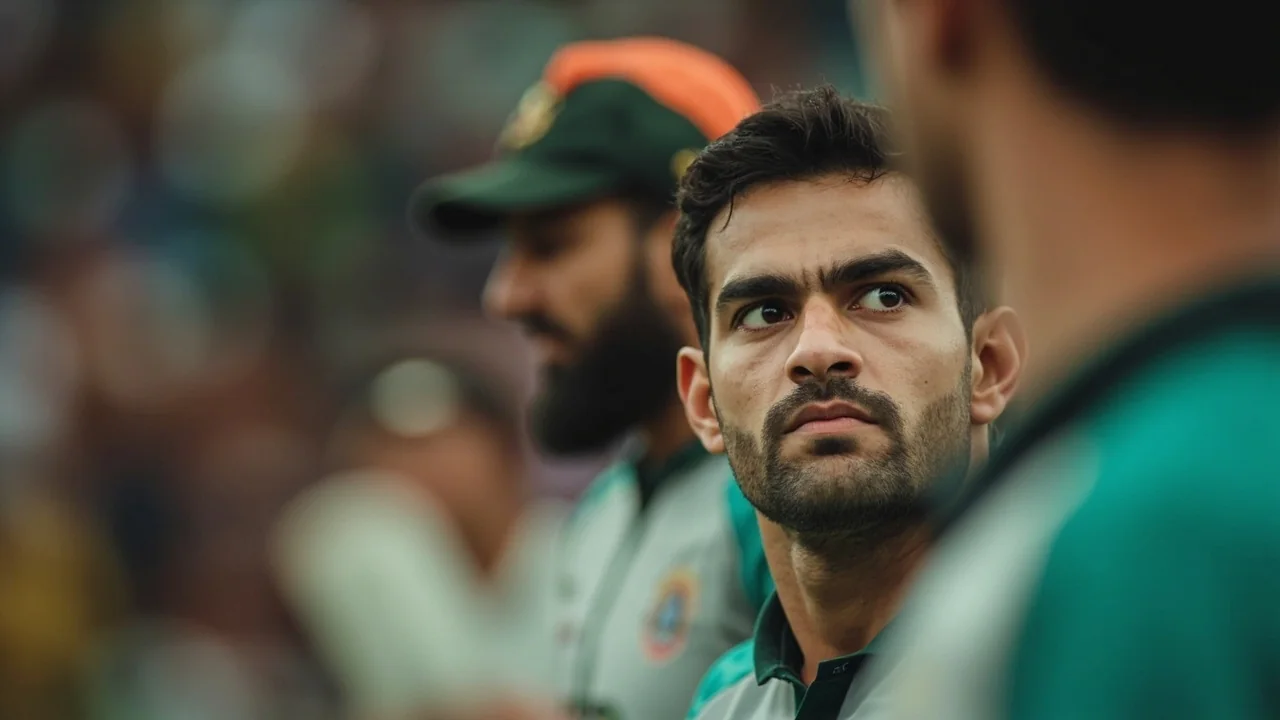
The 17 August 2026 dismissal of Nuwantha at covers (a ricochet off Yashasvi Jaiswal at silly point, caught by Shubman Gill) took Jadeja past Zaheer Khan and into a five-name Indian club that has been waiting for a left-armer since the format went global.
Ravindra Jadeja took his 350th Test wicket during the morning session of day two of the India vs Sri Lanka first Test at the Galle International Stadium on 17 August 2026, when Sri Lanka's Nuwantha was caught at covers by Shubman Gill. The ball did not go to Gill cleanly. It struck Yashasvi Jaiswal at silly point first and looped upward to the cover fielder, who completed the catch with the soft hands the catch demanded. Jadeja had the new ball in his hand and Sri Lanka were already five wickets down.
The dismissal moved Jadeja past Zaheer Khan, who finished on 311 Test wickets and has been the highest-placed Indian left-arm bowler on the all-time list since his retirement in 2015. Jadeja is the first Indian left-armer to 350 in the format, and the third left-arm spinner globally after Sri Lanka's Rangana Herath, who finished on 433, and New Zealand's Daniel Vettori, who finished on 362. The milestone also took him into a five-name Indian bowling club that, until his arrival, had no left-arm representation: Anil Kumble (619), Ravichandran Ashwin (537), Kapil Dev (434) and Harbhajan Singh (417).
The delivery was a stock left-arm orthodox delivery, pushed through fuller than a typical length and angled into the right-hander before dipping away from the line of off stump. Nuwantha shaped to work it through the leg side and closed the face too early. The leading edge flew low and hard toward the silly-point region, where Yashasvi Jaiswal got his body in the way. The ball deflected off Jaiswal's chest, climbed sharply, and Shubman Gill settled under it at a conventional cover position with the catch completed at head height.
Two notes on what the dismissal tells you about the match situation. First, India were already attacking. A conventional slip and gully were not in play, with silly point and a short cover instead, which means the captaincy read the pitch as one that would not carry to the cordon. Second, the leading edge off a left-armer's stock ball is the dismissal mode that has bought Jadeja his career-defining clusters of wickets. Batters close the face early because the angle forces the shot, and the edges fly to positions the field has been set up to attack. India had two of those positions occupied for the milestone ball, and both fielders contributed.
Jadeja's 350 Test wickets put him fifth on India's all-time list. The four above him are all right-arm bowlers, three of them spinners and one a seam-bowling all-rounder: Anil Kumble (619), Ravichandran Ashwin (537), Kapil Dev (434), and Harbhajan Singh (417). Kumble and Ashwin remain active in retirement roles with the BCCI's National Cricket Academy and the senior selection committee respectively; Kapil and Harbhajan have been out of the Indian dressing room since 1994 and 2016 respectively. The list above Jadeja reads like a short history of Indian bowling since the 1990s, and the left-arm slot in that history is empty until you reach the next-highest left-armer, Zaheer Khan at 311.
The global left-arm spinner list is smaller and has only three names on it. Rangana Herath finished on 433 Test wickets for Sri Lanka across 93 matches between 1999 and 2018, an average of 4.6 wickets per Test that puts him first among left-arm spinners in Tests. Daniel Vettori finished on 362 for New Zealand across 113 Tests between 1997 and 2014, with a much lower strike rate than Herath's but a longer career. Jadeja, with 350 in 87 Tests at the time of writing, has the highest strike rate of the three left-arm spinners on the list, and is the only one still playing.
| Bowler | Country | Test wickets | Era | Arm |
|---|---|---|---|---|
| Anil Kumble | India | 619 | 1989-2008 | Right-arm leg-spin |
| Ravichandran Ashwin | India | 537 | 2010-2024 | Right-arm off-spin |
| Kapil Dev | India | 434 | 1978-1994 | Right-arm fast-medium |
| Rangana Herath | Sri Lanka | 433 | 1999-2018 | Left-arm orthodox |
| Harbhajan Singh | India | 417 | 1998-2016 | Right-arm off-spin |
| Daniel Vettori | New Zealand | 362 | 1997-2014 | Left-arm orthodox |
| Ravindra Jadeja | India | 350 | 2012-present | Left-arm orthodox |
| Zaheer Khan | India | 311 | 2000-2015 | Left-arm fast-medium |
The 350 mark is also the threshold for a more exclusive list: players in Test history with 4,000 runs and 350 wickets. Jadeja is the fourth player in Tests to record that all-rounder double, joining Kapil Dev (5,134 runs and 434 wickets for India), Ian Botham (5,200 runs and 383 wickets for England) and Daniel Vettori (4,531 runs and 362 wickets for New Zealand). Botham is the only fast bowler on the list. The three spinners share a profile: long Test careers, lower-order runs at a healthy average, and frontline spells that buy wickets in clusters.
India's first innings closed at 462 all out. Devdutt Padikkal carried the bulk of the run-scoring with 167, his second Test century and his first away from home. KL Rahul added 82 at the top of the order, and Dhruv Jurel contributed 51 down at number seven in a stand that took India's lead past 400. The lower order did not add enough for the total to read dominant. India were 380 for 6 at one stage on day one and lost their last four wickets for 82, but the run-rate was healthy throughout and the surface played as the visiting camp expected.
Sri Lanka's first innings began at 90/5, the position they found themselves in at lunch on day two. The collapse was built around the new ball: Sri Lanka's openers and number three fell in the first eleven overs, and Jadeja's milestone wicket, with the score on 90, was the fifth to fall. The middle order then rebuilt. Sri Lanka reached 236/5 by the close of play on day two, with Kamindu Mendis and Dinesh Chandimal putting on an unbroken sixth-wicket stand of 146 to take the match out of the immediate new-ball window.
Three tactical notes from the day. First, Sri Lanka's middle order did not fall to spin. Both set batters are right-handed players comfortable working the ball on the leg side, which is the mode Jadeja concedes runs on at Galle. Second, the surface offered some turn but not enough to dismiss the right-handed batters from the rough. The ball was holding, not jumping. Third, India's bowlers rotated the seamers more than the spinners in the afternoon session, an indication that the captaincy read the conditions as still favouring the new ball 25 overs in. Jadeja bowled 14 of the day's 90 overs; the lead seamers shared the other 76 between them.
India's squad for the Sri Lanka Test series does not include a second frontline spinner. Washington Sundar and Kuldeep Yadav were both unavailable, with the selectors carrying Jadeja, Ashwin (now retired from Tests), and Axar Patel as the spin options. The milestone reaffirms the management's central selection question: how long can Jadeja carry the spin load alone when Ashwin is no longer in the squad? The first-innings workload answer at Galle is 14 overs per day in conditions that suit him, with the seamers doing the heavy lifting. That answer holds for Tests in India and Sri Lanka, but the selectors will need to revisit it once the team is playing in England, South Africa or Australia.
The franchise read is more direct. Jadeja is the most expensive all-rounder in IPL auctions for the third cycle in a row, and the milestone is the kind of data point that locks his auction floor above the 14 crore mark regardless of franchise purse constraints. His role for the Chennai Super Kings does not change. He remains the third seamer, sixth batter, and fielder at cover, but the franchise's selection template for the IPL 2027 auction now has one fewer question to answer in the all-rounder column.
The squad-watch lens for fantasy operators is the matchup angle. Jadeja's career wickets against right-handed batters in Tests come at a strike rate of 53, against left-handers at 73. The Sri Lanka middle order has more right-handers than left-handers in the current squad (Chandimal, Mendis, Mathews, de Silva), which is why Jadeja is bowling the long spells and why the leading-edge mode of dismissal is the one that is buying him wickets. The fantasy-relevant number is not the 350 milestone but the matchup-specific strike rate: when India are playing a team with five or more right-handed top-seven batters, Jadeja is a captaincy-grade pick on every XI sheet. That profile has not changed.
Three things are worth tracking through the rest of the Galle Test. First, can Sri Lanka's middle order push past 350 and avoid the follow-on? The follow-on threshold is 263, and Sri Lanka were 236/5 at stumps. Kamindu Mendis and Dinesh Chandimal are both set, but Jadeja's morning spell is the one most likely to break the stand, and the new ball is eight overs away. Second, how does India's batting order read for the second innings? Padikkal's 167 was his first Test hundred away from home and locks his slot at number three for the rest of the series. The openers, Rohit Sharma and Yashasvi Jaiswal, both need runs, and the captaincy may move them around if one of them fails again in the second innings. Third, when does Ashwin's replacement enter the spin conversation? Axar Patel was the touring reserve; whether the management keeps him in that role or promotes him for the second Test in Colombo is the selection call the milestone does not answer.
What the milestone does change is the long-arc record. Jadeja is the first Indian left-armer to 350, the fifth Indian bowler to 350, and the fourth player in Tests to record the 4,000-run and 350-wicket double. Each of those lines is independently citable and will keep the milestone in tour reports for the rest of the series. The on-field impact at Galle is the same one it would have been without the number: a stock left-arm spinner, on a turning surface, bowling to a right-handed middle order that closed the face too early. For more on India's tour squad, the selection calls behind it, and the franchise-level squad watch that mirrors it, the cricket teams desk keeps the latest role changes, rotation patterns and confirmed XIs.