FantasyCricketScore · India tour of Zimbabwe 2026

India vs Zimbabwe T20I series: schedule, squads, streaming and what fantasy players should watch

Shreyas Iyer takes charge for the first time, and the squad looks tilted toward pace and a long tail. The opposition, fresh from a bruising 2026 T20 World Cup Super Eights run, is not about to roll over in Harare.

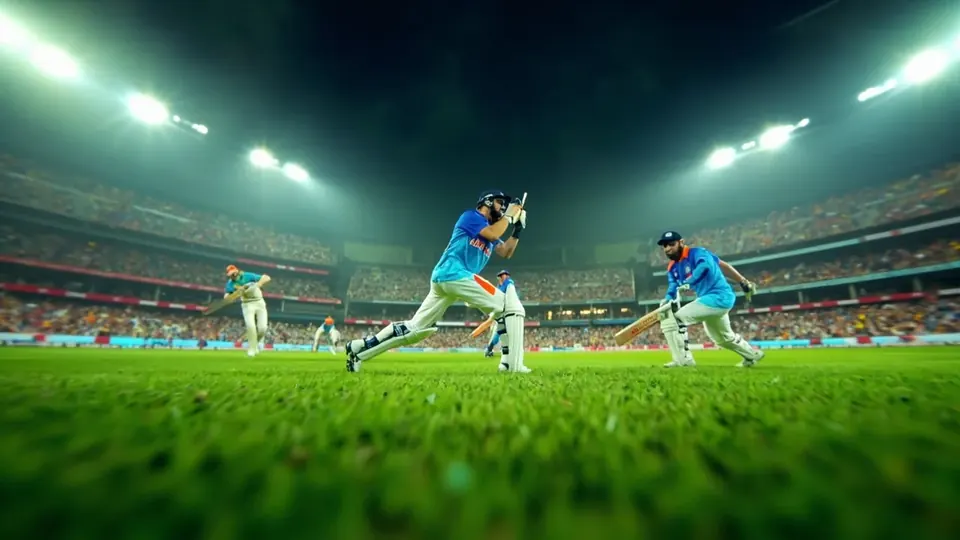
Wide establishing view of the Harare Sports Club on a winter afternoon, with grass banks and a small crowd
The tour begins at a ground Zimbabwe knows intimately — Harare Sports Club, the same venue that hosted Zimbabwe's Super Eight fixtures against Australia and Sri Lanka earlier this year.
The series in one paragraph

A new captain, the same opponent, three short games.

India will play Zimbabwe in three T20Is at the Harare Sports Club starting Thursday, 23 July 2026. All three matches are scheduled at the same venue, with the second and third games expected to follow on Saturday and Sunday respectively — a tight turnaround that, even in July's Harare winter, leaves little room for rotation. The series is a bilateral rather than an ICC event, and falls outside the Future Tours Programme window in which the ICC's mandatory release rules technically apply, which is why several first-choice India names are absent and the squad reads more like an audition than an A-team.

The assignment is, formally, Iyer's first series as India's full-time T20I captain. He was named to the role in June after Suryakumar Yadav's tenure closed on the back of the T20 World Cup win, and the Englishman-or-Irishman headlines from earlier in the summer did the rest of the talking. India lost the two-match T20I series in Belfast 2-0, then lost the five-match series in England 4-0 — the opener at Chester-le-Street was rain-affected after India had posted 189/7, with fifties from Abhishek Sharma and Iyer himself. None of those results were discussed at the squad announcement. The brief from the selectors, as always on these trips, was simpler: build combinations, identify core T20 players ahead of the next cycle, and win the series.
Match schedule

What we know about the three fixtures.

A batsman completing a controlled drive in a T20I fixture, captured at mid-pitch with a tight crop and a sharp ball under the bat
Tight finishes are the realistic expectation in Harare: five of the last eight T20Is between these two sides have been decided by under thirty runs or in the final over.

Matchdays are confirmed for 23, 25 and 27 July 2026, weather and venue permitting. The first ball is most likely to be bowled in the early afternoon local time, which translates to a late-afternoon start in India — useful for operator planning, less useful for fan fatigue on a working Sunday. The broadcast partner for the men's home broadcast in India is Unite8 Sports TV channels, with live streaming routed through the FanCode app and website. No Toss-time XI has been published at the time of writing, but India's likely XI will be deduced from the chosen XI once announced.

MatchDayVenueFormat
1st T20IThursday, 23 July 2026Harare Sports Club, HarareDay
2nd T20ISaturday, 25 July 2026Harare Sports Club, HarareDay
3rd T20IMonday, 27 July 2026Harare Sports Club, HarareDay

Zimbabwe's captain Sikandar Raza framed the assignment more bluntly than the headline writers did, telling reporters on the eve of the series that India were "not favourites" — a position supported by the head-to-head ledger rather than the ICC rankings. Pakistan's recent visit to the same venue in June-July included the visitors winning the rubber, but several Zimbabwe first-choice players were rested for that run, which is part of why the home side is treating this as a measuring-stick series.

India squad

Fifteen names, no frontline Test all-rounder.

Medium-wide tactical view of a T20 field with three slip fielders, a short cover and a deep mid-wicket in position
Field placement at the Harare Sports Club typically tilts aggressive in the powerplay. Three slips for the new ball, with a sweeper beyond point from the fifth over onwards, has been the most-used template here in 2026.

The notable absences from the wider T20I pool — Hardik Pandya, Suryakumar Yadav, Jasprit Bumrah, Arshdeep Singh, Kuldeep Yadav, Mohammed Siraj and the resting Test regulars — frame the selection: this is a group built around younger batters and a seam-heavy bowling unit. Vaibhav Sooryavanshi retains his place at the top of the order after his debut-series in England; Abhishek Sharma slots back in as a left-handed counterweight; Ishan Kishan is the senior keeper, with Prabhsimran Singh travelling as the second gloves option. Iyer himself bats at three or four — the order will tell us how aggressively the management wants the powerplay to read.

RolePlayers
CaptainShreyas Iyer
Top / middle orderTilak Varma, Vaibhav Sooryavanshi, Abhishek Sharma, Ishan Kishan, Shivam Dube, Suryansh Shedge, Rinku Singh
Wicketkeeper optionsIshan Kishan, Prabhsimran Singh
SpinRavi Bishnoi (frontline wristspin)
Pace / seam-bowling all-roundersHarsh Dubey, Prince Yadav, Yash Thakur, Ashok Sharma, Mayank Yadav

Read the bowling list as the most important line in the squad — five seamers, one front-line spinner. Bishnoi will carry the middle-overs wicket-taking load by himself; the question is whether the management trusts a sixth bowler to be Iyer himself (off-spin against right-handers) or whether Shivam Dube's four overs are non-negotiable. That choice, more than the toss, often decides whether Dube plays in the XI.

Zimbabwe squad

Raza's core, Bennett's rise, and a wicketkeeper choice.

The home side has chosen continuity. Sikandar Raza remains captain and remains the team's leading T20 all-rounder; Brian Bennett opens and was Zimbabwe's highest-impact batter at the 2026 T20 World Cup. Brad Evans, Blessing Muzarabani and Richard Ngarava form a three-pronged pace unit that has genuine new-ball skill in Harare conditions, and the squad also names two specialist seam-bowling all-rounders — Wellington Masakadza and Tadiwanashe Marumani — to give Raza four-over backup options.

RolePlayers
CaptainSikandar Raza
Top / middle orderBrian Bennett, Ben Curran, Tadiwanashe Marumani, Dion Myers, Milton Shumba, Ryan Burl
Wicketkeeper optionsClive Madande (WK)
Spin all-rounderSikandar Raza (off-spin)
PaceBlessing Muzarabani, Richard Ngarava, Brad Evans, Tinotenda Maposa, Wellington Masakadza
WristspinTashinga Musekiwa, Newman Nyamhuri

Three notes worth carrying into your XI choices. First, Madande as the lone named keeper means the management is comfortable letting Raza bowl ten if the wrist-spinners — Musekiwa and Nyamhuri — are not yet trusted at this level. Second, Curran's selection at the top is the one to watch: he is the more measured of the openers, and a Burl-at-six template is plausible on a slow track. Third, Blessing Muzarabani's workload after a long international year is the only real injury concern for the home side; expect the management to rotate him through the series.

Fantasy angles

Three players worth tracking on every XI sheet.

The temptation on a tour like this is to fill India-only teams and assume a clean sweep. The opposition deserves more respect than that. In fourteen T20Is between these two sides, India lead 11-3, but the more relevant recent data is from Zimbabwe's 2026 T20 World Cup run, where they beat both Australia and Sri Lanka in the group stage before exiting in the Super Eights. They play fearless cricket in Harare, and the pitches in mid-July tend to reward that attitude: a little grass in the morning, true bounce through the day, and a fourth-innings chase that rarely needs more than the fifty-over par.

Three names worth carrying into every XI decision:

  1. Abhishek Sharma — left-handed powerplay batter.He's a bowler on this tour, but his primary value in fantasy terms is at the top of the order. India open with him against new ball, and the Harare outfield in winter rewards hard-hit ground strokes.
  2. Sikandar Raza — captain, lead bowler, lead batter.Three dimensions of points on every card. Against an India XI that may start with only one frontline spinner, Raza's off-spin in the middle overs is the most consistent point-scoring lock across all three matches.
  3. Vaibhav Sooryavanshi — the debutant's ceiling.He plays the role the rest of the order is built around. If he gets through the powerplay, his strike rate is the difference between a 165 par and a 195 par — and on this ground, that is the difference between India batting first and batting second.

A few operator-level details worth saving into your matchday notes for the desk's rolling cricket news thread: the toss factor at Harare Sports Club in July is closer to neutral than to chase-favouring, and the dew window opens late, around the sixteenth over — useful for captain choice if you wait for the toss. India have used spin more than pace across the day in three of their last four T20Is here, but the volume of left-arm pace in the squad (Dubey, Prince Yadav, Yash Thakur, Mayank Yadav) is an indication that the management is preparing for seam-friendly conditions if the surface greens up. The first-innings score will tell you the rest.

How to follow the series

Broadcast, streaming and matchday logistics.

Live coverage of the three-match series is available in India through Unite8 Sports TV channels, with ball-by-ball streaming through the FanCode app and website. Both services require an active subscription; the latter is the more practical option for fantasy operators who want a parallel scorecard alongside their XI. The first match starts in the early afternoon in Harare, which is a working-day window in India — plan for a five-hour block from the toss, not a seven-hour one.

The weather forecast through the week is mild by Harare winter standards: cool mornings around 8-10°C clearing to 21-23°C in the afternoon, with low rain risk. Cloud cover is more likely than precipitation, which is a small help for seam bowlers in the first six. None of this changes the expected template — India bowl first more often than not in these conditions, and Zimbabwe's preference at this ground has been to chase in limited-overs cricket since the start of 2025.

For live scores and venue-by-venue stat tracking, the matchday desk feed will carry the run-rate, partnership tracker and key wicket timeline from the first over. For post-match analysis, the squad-rotation implications for the rest of India's T20I cycle are covered in the next morning's news update.

The next thing to watch

What changes by Sunday.

Three matches in five days leave little room for experimental line-ups. By the end of the third T20I, the desk expects two questions to be answered: whether the seam-heavy balance is the shape of the next India T20I cycle, or whether the management reverts to a Bishnoi-plus-Dube model once the first-choice spinners return; and whether Brian Bennett has done enough to displace the more conservative opening template that has served Zimbabwe in previous bilateral series. Captaincy in T20 cricket is a sample-size job, and three matches is barely enough to start a conversation.

What is more certain is the player-pool shape. Sooryavanshi will have batted at least three times, Ishan Kishan will have kept against five different quality pace bowlers, and Bishnoi will have bowled no fewer than twelve overs in the middle. That is the data the selectors will carry forward — and it is the data fantasy operators should be paying close attention to before locking next week's XI windows.

Get Started Compare Options
Play now