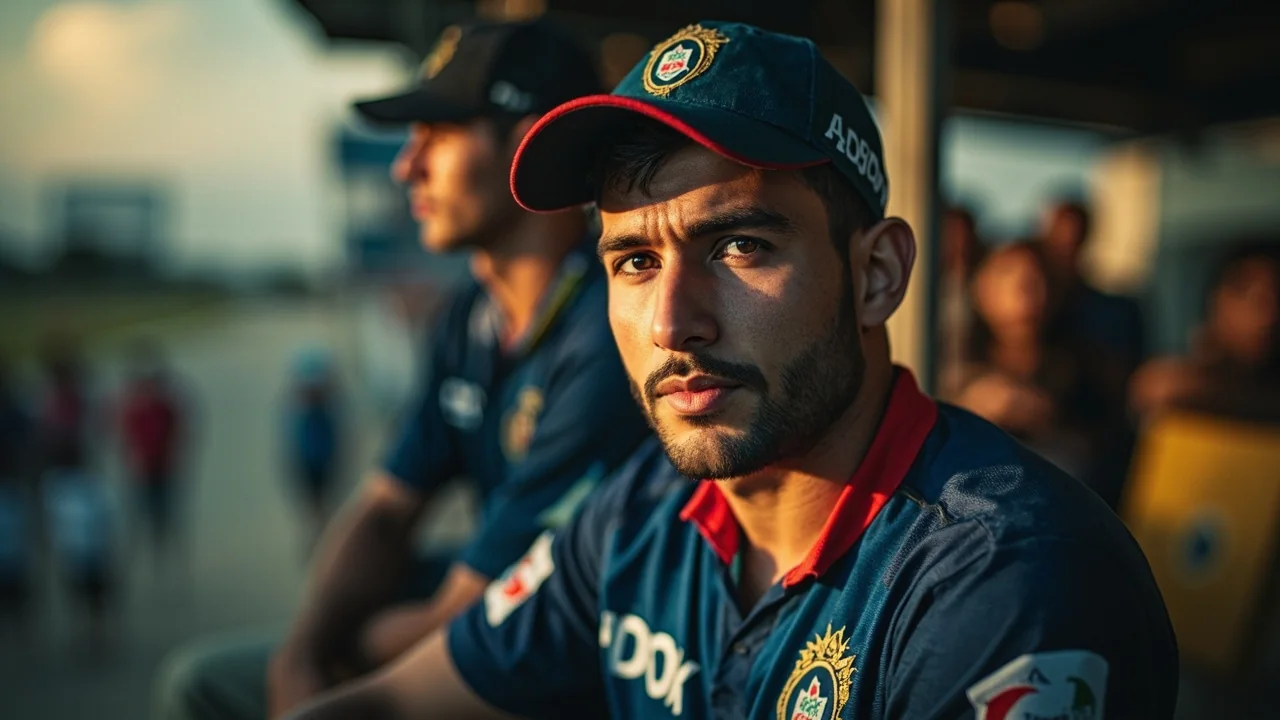
The November 2024 mega auction at the Abady Al-Johar Arena set the prices, the squad rules and the replacement trail that the IPL 2026 cycle is now building on. The 577-player pool, the ₹120 crore purses, Pant's ₹27 crore record, and the names that reshaped fantasy drafts.
On 24 and 25 November 2024 the IPL held its first overseas mega auction at the Abady Al-Johar Arena in Jeddah, Saudi Arabia. Ten franchises walked in with ₹120 crore purses, a minimum squad size of 18, a maximum of 25, and a ceiling of eight overseas players per side. The registered auction pool ran to 577 cricketers, with 367 Indians and 210 overseas names split across base prices from ₹30 lakh at the floor to ₹2 crore at the ceiling. Two days later, the price ceilings, the captaincy math and the IPL 2025 squads that the entire 2025 season would be built on were already in the public record.
The Jeddah venue itself was the headline for the wrong reasons at first. Jeddah had not hosted an IPL auction before, and the choice forced franchises to send their contingent overseas at a moment when they were still finalising retentions. The two-day window did the job. By the close of play on 25 November the ten squads had been signed, slotted and photographed, the marquee set had been sold, and the record book had been rewritten three times before the league even began. The off-season from that point on was shaped less by retentions than by the ledger the auction left behind.
The November auction operated under a single purse ceiling and a single squad-size band. Each of the ten franchises had ₹120 crore to spend across a minimum of 18 and a maximum of 25 players, with up to eight overseas slots. The base-price ladder ran from ₹30 lakh at the floor to ₹2 crore at the ceiling. Franchises could take the floor slot for every buy, or weight the early rounds toward the ceiling, but the total spend across the squad could not cross the purse line. The two-day format meant the marquee and accelerated rounds had to settle the marquee names on day one, leaving day two to clear the bracket and fill the bench.
The rules shaped the bidding in three predictable ways. First, every franchise arrived in Jeddah with a clear split between retained players and auction money, and that split had already been published in the weeks before the event. Second, the eight-overseas ceiling forced teams to ration their foreign slots across batting and bowling roles, which is why so much of the marquee bidding centred on a small handful of multi-skill overseas names. Third, the ₹2 crore base price ceiling left a narrow band for headline bids, because most of the marquee names had already been priced at or close to that ceiling before the gavel came down.

The marquee set did the heavy lifting on the record book. Lucknow Super Giants bought Rishabh Pant for ₹27 crore, the highest price ever paid for a single player in IPL history, edging past the ₹26.75 crore Punjab Kings had briefly held for Shreyas Iyer. The Pant price reset what the marquee round meant: it had previously been a race to the ₹20 crore line; in Jeddah it was a race past ₹25 crore, with the bidders working in increments that nobody had used in public auctions before.
The overseas ledger moved just as sharply. Gujarat Titans signed Jos Buttler for ₹15.75 crore, a record for any non-Indian player at an IPL auction. Royal Challengers Bengaluru spent ₹6 crore on Rasikh Dar, the highest price paid for an uncapped player. And Rajasthan Royals took a 13-year-old named Vaibhav Suryavanshi at ₹1.1 crore, the youngest player ever bought at an IPL auction, a buy that looked like a footnote on day two and a squad-selection headline by April. Three record categories, set inside one venue, inside two days.
What each franchise walked out of Jeddah with defined the shape of the 2025 season. Five names set the tone. Rishabh Pant, bought for ₹27 crore by Lucknow Super Giants, became the most expensive player in IPL history. Shreyas Iyer, retained by Punjab Kings at ₹26.75 crore, briefly held the same record in the lead-up to the Pant bid. KL Rahul, picked up by Delhi Capitals for ₹14 crore, slotted into the top-order role they had been looking to fill. Mitchell Starc returned to Kolkata Knight Riders at ₹12.25 crore, the highest-priced overseas bowler in the auction. Jos Buttler, signed by Gujarat Titans at ₹15.75 crore, became the most expensive overseas player ever sold at the event.
The remaining marquee money went on multi-skill overseas names, allrounders who could bat at four and bowl four, and uncapped Indians whose base prices had risen sharply in the months before the auction. The result was a squad map that looked top-heavy at the front and bench-heavy at the back. Most franchises spent between 60 and 70 per cent of the ₹120 crore purse on their top five buys, leaving a thin margin for injury cover, mid-season signings and the overseas bench slot that the rules required. The mid-season replacement window that opened in March 2025 was, in retrospect, less a contingency than a planned expense.
The base-price ladder forced franchises to choose early. A franchise that took the ₹2 crore ceiling for one marquee buy had used 1.67 per cent of its purse before bidding for any other player. A franchise that stuck to ₹30 lakh for its bench could afford to spend 30 to 40 per cent of its purse on two marquee buys and still have change for the middle band. The October 2024 retention window had already taken the top retained names off the board, so by the time the auction opened in Jeddah the base-price ceiling was effectively the only path to a marquee signing.
Most franchises split the difference. They took the ₹2 crore ceiling on two or three marquee names, dropped to the ₹1 crore to ₹1.5 crore band for their role-specific buys, and let the floor do the work on the bench. The accelerated round on day two cleared the bracket and left the franchises with the squad-size band to fill rather than the purse to spend. By the close of play on 25 November every franchise had hit at least the minimum squad size, and most had hit the overseas ceiling or sat one slot below it. The purse residual at the end of day two became the off-season repair budget.
The spare purse from the Jeddah auction funded a string of mid-season signings once the 2025 IPL got under way. Sunrisers Hyderabad signed Wiaan Mulder as a replacement for the injured Brydon Carse in early March 2025. Lucknow Super Giants picked up Shardul Thakur after Mohsin Khan went down with an injury. Royal Challengers Bengaluru, who had spent heavily on the marquee set in November, used the spare purse to cover the Jasprit Bumrah-shaped hole in their overseas seam attack when the original signing failed a fitness clearance. The replacement window ran from the second week of the league through the playoff break, and most franchises used it at least once.
The replacement window was, in effect, a second mini-auction run from the same purse. The franchises that had kept the spare purse reserved walked into April with the option to spend, while the franchises that had run the purse to the ceiling in November had no spare cash and had to rely on their bench. The gap showed up most clearly in the playoff race, where the franchises with replacement cover had a depth advantage over those that did not. By the time the league ended in May, every franchise had used the replacement window at least once, and most had used it twice. The Jeddah ledger had a clean second chapter.
The clearest legacy of the Jeddah auction is the price ladder it locked in. The ₹27 crore Pant bid reset what a marquee buy costs at an IPL auction. The ₹15.75 crore Buttler bid reset what an overseas multi-skill player costs. The ₹6 crore Dar bid reset what an uncapped Indian costs. The ₹1.1 crore Vaibhav Suryavanshi bid reset what a teenager with first-class cricket upside costs. Each of those four price points became a budget line for the franchises entering the next auction cycle, and they have shaped the conversation around retentions, releases and trade windows since.
For the IPL 2026 cycle, the November ledger is the starting position. Retention windows, trade rules and the next mega auction will all be calibrated against the price points set in Jeddah. The 577-player pool, the ₹120 crore purses, the 18 to 25 squad band and the eight-overseas ceiling are still the framework the league is operating under. The only things that have moved are the names on the price tags and the order in which franchises have had to use the replacement window. The next mega auction, when it comes, will start from the same rulebook Jeddah used, and the price ceiling will start from the same place the Pant bid left it.
The next verified development on this desk is the IPL 2026 retention window, which is expected to close ahead of the next auction cycle. Until that list is published, the franchise price ladder set in Jeddah is the working reference for the IPL 2026 cycle. Fantasy operators tracking the IPL 2026 auction will want to mark the next retention window, because every release shifts a name back into the auction pool and resets the budget math for the franchises that have to fill the gap.
Filed under IPL 2026. The original source article was published by Utathya Nag on Olympics.com on 22 May 2025 and updated the same day at 11:46 GMT. The verification trail for every price quoted above is preserved on the original publisher page.